
Calling
Not every call should be automated. Knowing which is the work.
High-volume voice operations — outbound reminders, confirmations, collections follow-ups, inbound triage — look like one process. They are not. They are thousands of individual calls, and each one is a decision: does an agent handle this end to end, does it prepare the call and hand it to a person, or should a machine never make it?
Most vendors answer that question with a single automation number. We answer it with a ledger — which calls, in which lane, and why.
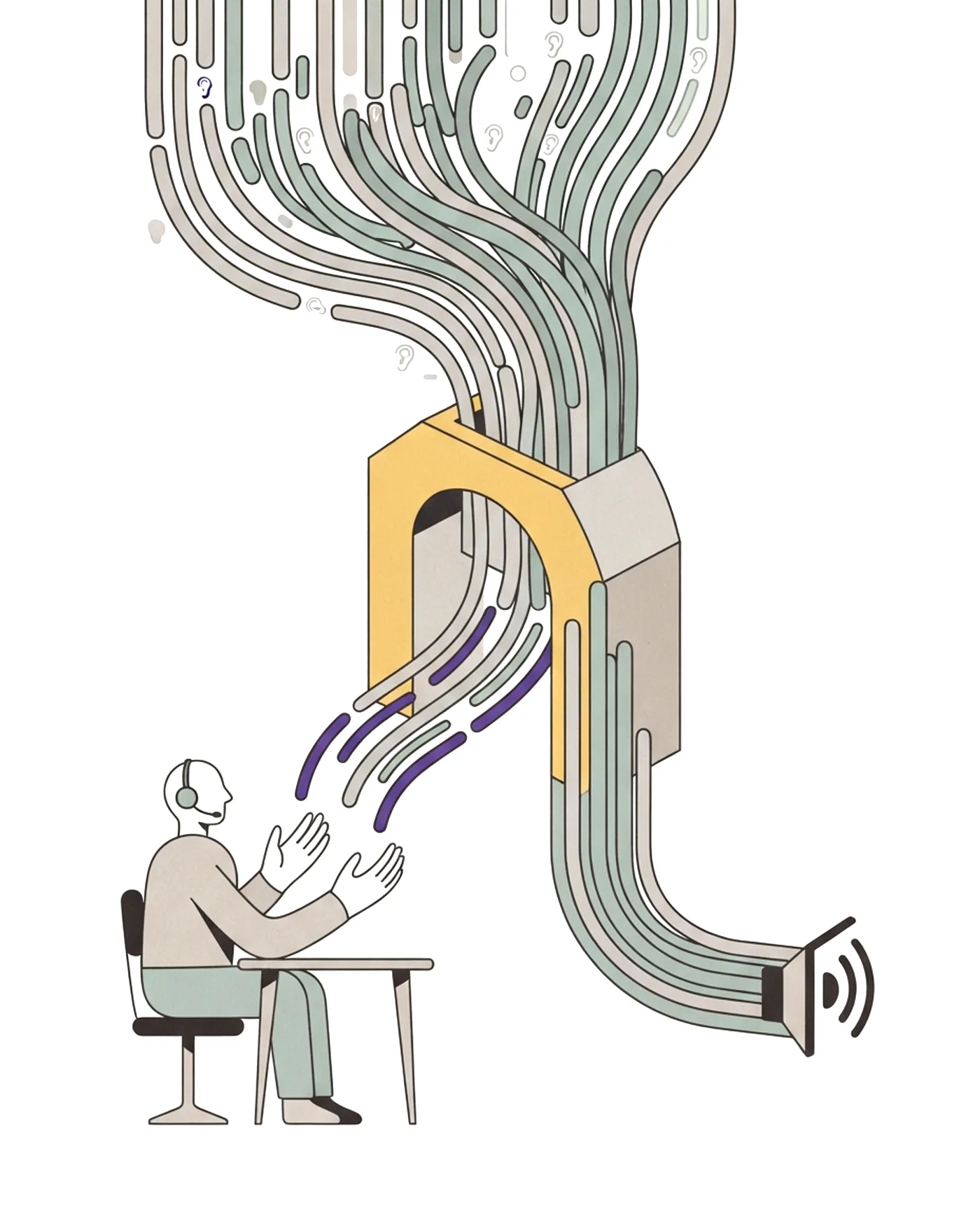
01 — The call ledger
The calls sort into three lanes.
Delegate — the agent takes the call end to end and your team audits the log. Surface — the agent prepares or starts the call and a person finishes it. Hold — the call stays human, full stop. Drawing those lines for your call types is the first thing we do.
02 — Production
What production calling actually requires.
Demos happen in quiet rooms. Production does not. Whether a calling operation holds up comes down to unglamorous engineering.
- Latency
Low enough that people don’t talk over the agent. Delay is what makes a call feel like a machine.
- Evals per language
No language ships until it passes evals — accents, code-switching, numbers read aloud.
- Mid-call handoff
When the agent hands off, the person inherits the conversation — not a transcript to reread while the customer waits.
- Audio quality
Engineered for where calls actually happen: traffic, shop floors, speakerphones, bad networks.
Further reading
Contact
Let’s talk.
Tell us what you want AI to do. You’ll hear back within a day.
Prefer to talk? Book 30 minutes directly.